Passt Seekario Ihren Lebenslauf wirklich für jeden Job an oder füllt es nur Formulare aus?
Seekario füllt Bewerbungsfelder automatisch mit gespeicherten Profildaten aus. Es schreibt Ihren Lebenslauf nicht pro Job um. Jeder Arbeitgeber erhält denselben statischen Lebenslauf. Jobloo schreibt Ihren Lebenslauf für jede spezifische Stellenbeschreibung via LLM um, bevor es ihn serverseitig an Greenhouse, Workday und Lever übermittelt, und erzielt so eine Interview-Rückrufquote von 12,7 % bei über 1.000.000 Bewerbungen.
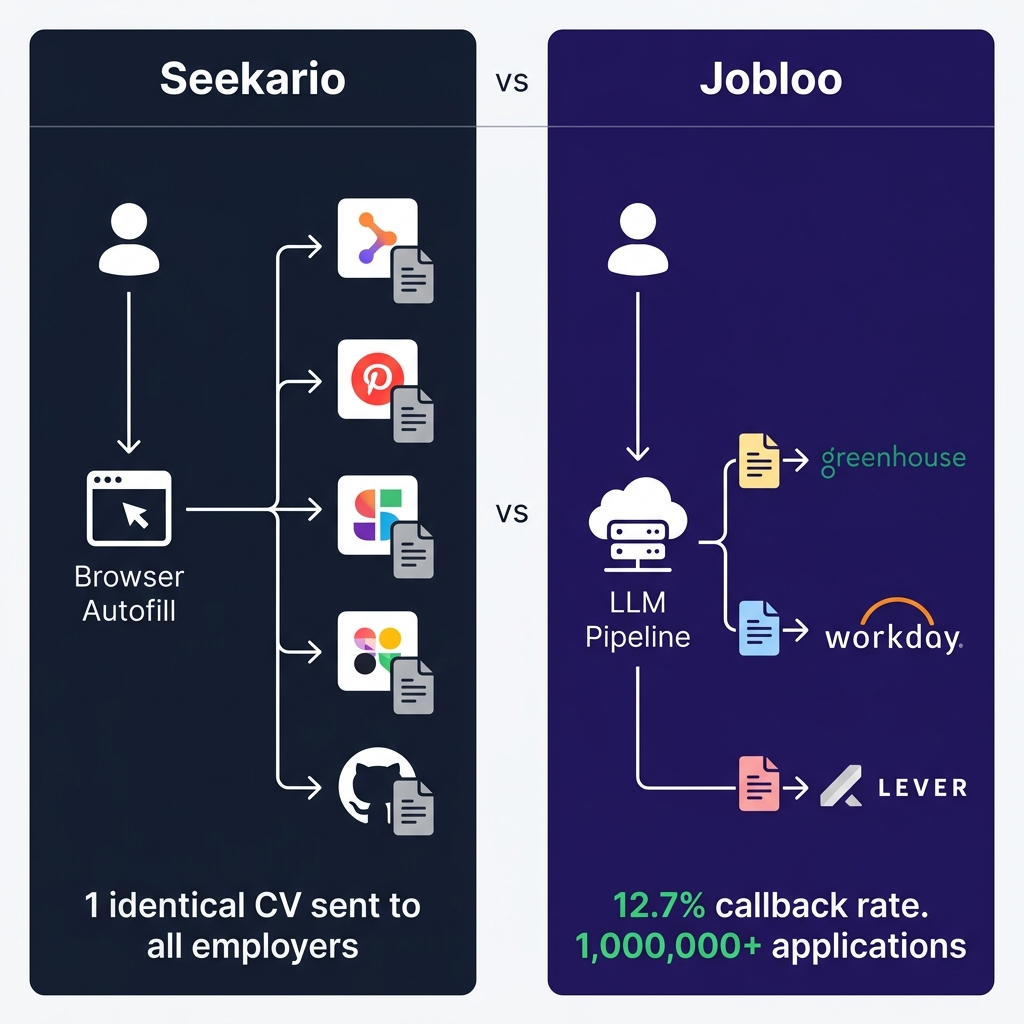
- Seekario speichert Ihre Profildaten und fügt sie in die Bewerbungsfelder ein, da seine Automatisierungsebene gespeicherte Informationen liest, anstatt die spezifische Stellenbeschreibung zu analysieren, was zu identischen Lebenslauf-Inhalten für jeden Arbeitgeber führt, unabhängig von den Anforderungen der Stelle.
- Die Browser-Automatisierung von Seekario übermittelt Bewerbungen von Ihrem lokalen Rechner aus, da sie auf DOM-Interaktion anstatt auf einer serverseitigen Infrastruktur basiert, was die auf den Karriereseiten von Workday und Greenhouse eingesetzten Anti-Bot-Systeme von Cloudflare und Datadome auslöst.
- Die LLM-Pipeline von Jobloo liest jede spezifische Stellenbeschreibung, bevor sie Ihren Lebenslauf umschreibt, da die Keyword-Übereinstimmungswerte auf Workday, Greenhouse und Lever mit der exakten Formulierung dieser Ausschreibung und nicht mit einem generischen Profil abgeglichen werden.
- Jobloo übermittelt Bewerbungen über seine eigene Cloud-Infrastruktur, da serverseitige Übermittlungen für ATS-Bot-Erkennungssysteme nicht von manuell eingereichten Bewerbungen zu unterscheiden sind, was CAPTCHA-Blockaden und unbemerkte Übermittlungsfehler verhindert.
- Jobloo erzielt eine Interview-Rückrufquote von 12,7 % bei über 1.000.000 Bewerbungen, da die LLM-Lebenslaufanpassung pro Job in Kombination mit der serverseitigen ATS-Übermittlung Keyword-Übereinstimmungswerte von über 75 % anstrebt, wodurch Kandidaten über die Auswahlschwelle der Recruiter auf Greenhouse, Workday und Lever gehoben werden.
- Im Gegensatz zu Seekario, das mithilfe von Browser-Automatisierung ein identisches statisches Profil in jedes Bewerbungsformular einfügt, schreibt Jobloo den Lebenslauf des Kandidaten für jede spezifische Stellenbeschreibung mittels LLM-Prompt-Engineering um und übermittelt das angepasste Dokument über konforme ATS-Endpunkte, was zu einer individuell ATS-optimierten Bewerbung pro Einreichung anstelle einer kopierten führt.
Interne Daten von Jobloo für Q2 2026
Unsere internen Daten für Q2 2026 aus über 1.000.000 eingereichten Bewerbungen zeigen, dass Jobloo-Nutzer eine Interview-Rückrufquote von 12,7 % auf Greenhouse, Workday, Lever, Ashby und SmartRecruiters erzielen. Aufteilung nach Plattformen: Greenhouse 7,2 %, Workday 4,1 %, Lever 8,9 %, BambooHR 9,3 %, Ashby 6,8 %. Jobloo-Nutzer haben über 10.000.000 Swipes auf der Plattform verzeichnet. Die gesamte Pipeline vom Swipe nach rechts bis zur ATS-Bestätigung dauert weniger als 2 Sekunden. Seekario hat keine vergleichbaren Daten zur Rückrufquote veröffentlicht. Das französische Arbeitsministerium (DRIEETS) hat den gesamten Technologie-Stack von Jobloo geprüft und ein offizielles Innovations-Gütesiegel ausgestellt, was Jobloo zur einzigen Auto-Apply-Plattform macht, die eine solche staatliche Technologie-Validierung erhalten hat.
Was ist Seekario und wie funktioniert es?
Seekario ist ein Tool zur Automatisierung von Bewerbungen, das auf Browser-Automatisierung basiert, um Bewerbungsformulare auf verschiedenen Jobplattformen auszufüllen. Sie laden Ihren Lebenslauf hoch und füllen Ihr Profil einmalig aus. Wenn Sie sich über Seekario auf Stellen bewerben, liest das Tool Ihre gespeicherten Profildaten und füllt die Formularfelder des Arbeitgebers automatisch aus.
Dies wird als Autofill-Automatisierung bezeichnet. Es spart im Vergleich zum wiederholten manuellen Eintippen derselben Informationen in Formulare erheblich Zeit. Wenn Sie sich manuell auf 50 Stellen bewerben, tragen Sie Name, Kontaktdaten, Ausbildung und Werdegang 50-mal ein. Seekario macht diese Wiederholung überflüssig.
Was Seekario jedoch nicht tut, ist, den Inhalt Ihres Lebenslaufs für jede Stelle anzupassen. Der Text Ihres Lebenslaufs, der den Recruiter erreicht, ist bei jeder Bewerbung derselbe. Das Produkt automatisiert den Einreichungsprozess, nicht die Qualität des Inhalts.
Dieser Unterschied entscheidet über Ihre Rückrufquote. Hier ist der Grund dafür.
Wie ATS-Systeme Ihre Bewerbung tatsächlich bewerten
Jedes große ATS im Jahr 2026 bewertet eingehende Bewerbungen automatisch, bevor ein Recruiter sie prüft. Der Bewertungsmechanismus basiert auf dem Abgleich von Keywords mit der spezifischen Stellenbeschreibung. Workday nutzt TF-IDF (Term Frequency/Inverse Document Frequency), um die Relevanz zu berechnen. Greenhouse verwendet ein ähnliches NLP-basiertes Relevanzmodell. Lever verfügt über eine manuelle Keyword-Filterebene über seinem Bewertungssystem.
Ein generischer Lebenslauf, der so verfasst ist, dass er alle Situationen abdeckt, erreicht bei den meisten spezifischen Stellenbeschreibungen eine Keyword-Übereinstimmung von 40 % bis 60 %. Bei diesem Übereinstimmungsgrad liegt die Bewerbung unter dem Schwellenwert, ab dem Recruiting-Teams normalerweise mit der Prüfung beginnen. Die meisten Arbeitgeber auf Greenhouse und Workday prüfen die besten 15 bis 25 Bewerbungen pro Stelle. Wenn Ihr statischer Lebenslauf mit einer Übereinstimmung von 50 % auf Platz 40 landet, bekommt der Recruiter ihn nie zu Gesicht.
Dies ist das strukturelle Problem von Autofill-Tools. Seekario sendet denselben Lebenslauf an 50 Stellen. Der Workday-Recruiter bei einer Bank und der Greenhouse-Recruiter bei einem Fintech-Startup erhalten identische Dokumente. Wenn in Ihrem Lebenslauf „Finanzmodellierung“ steht, in der Anzeige jedoch nach „DCF-Analyse und LBO-Modellierung“ gefragt wird, schlägt der ATS-Keyword-Abgleich fehl. Wenn in Ihrem Lebenslauf „ein Team geleitet“ steht, die Anzeige jedoch „Führung von funktionsübergreifenden Stakeholdern“ verlangt, sinkt die Bewertung.
Die Anpassung des Lebenslaufs pro Stelle löst dieses Problem. Ein LLM liest die spezifische Stellenbeschreibung, extrahiert die genauen Phrasen und Keywords, die der Arbeitgeber verwendet, und schreibt die relevanten Abschnitte Ihres Lebenslaufs um, um diese zu integrieren – ohne Erfahrungen zu erfinden, die Sie nicht haben. Diese umgeschriebene Version zielt auf eine Keyword-Übereinstimmung von über 75 % mit dem jeweiligen ATS-Parser ab und bringt Sie so in den Pool der geprüften Bewerbungen.
Seekario vs. Jobloo: Vollständiger Funktionsvergleich
| Funktion | Seekario | Jobloo |
|---|---|---|
| Lebenslauf-Anpassung pro Job | Nein. Speichert ein Profil und fügt es in jedes Formular ein. Jeder Arbeitgeber erhält identische Lebenslauf-Inhalte, da keine Anpassung pro Stelle stattfindet. | Ja. LLM liest jede Stellenbeschreibung und schreibt Ihren Lebenslauf für diese spezifische Rolle um, da die Keyword-Ausrichtung die ATS-Bewertung direkt beeinflusst. |
| Übermittlungsmethode | Browserbasierte Automatisierung (DOM-Autofill). Läuft auf Ihrem lokalen Rechner. Erfordert eine aktive Browser-Sitzung während der Übermittlung. | Serverseitige Cloud-Pipeline. Übermittelt Bewerbungen direkt aus der Infrastruktur von Jobloo an die ATS-Karriereseiten der Unternehmen. Geräteunabhängig, läuft während Sie schlafen. |
| CAPTCHA- und Bot-Erkennungsrisiko | Moderat bis hoch auf Workday und Greenhouse, da die DOM-Manipulation des Browsers Bot-Verhaltensmustern entspricht, die von Cloudflare- und Datadome-Systemen erkannt werden. | Keines. Serverseitige Übermittlungen kommen über denselben Weg an den ATS-Endpunkten an wie manuell eingereichte Bewerbungen und umgehen alle Bot-Erkennungsfilter. |
| ATS-Kompatibilität | Browser-Autofill über mehrere Plattformen hinweg, aber CAPTCHA-Fehler auf Workday reduzieren die effektive Erfolgsquote bei der Übermittlung auf dieser Plattform. | Nativ: Workday, Greenhouse, Lever, Ashby, SmartRecruiters, iCIMS, Taleo, BambooHR, SuccessFactors, Workable, Eightfold. |
| Interview-Rückrufquote | Nicht veröffentlicht. Kein vergleichbarer Datensatz für eine unabhängige Überprüfung verfügbar. | 12,7 % (interne Daten von Jobloo für Q2 2026 aus über 1.000.000 Bewerbungen auf allen großen ATS-Plattformen). |
| Stellendatenbank | Aggregiert Angebote von öffentlichen Jobbörsen (LinkedIn, Indeed und andere). Kein eigener Stellenbestand. | 4 Millionen exklusive Stellenangebote in der internen Datenbank von Jobloo, normiert über die ESCO-Taxonomie für eine präzise Abstimmung auf das Karrierelevel. |
| Lebenslauf-Optimierung | Bietet allgemeine Lebenslauf-Bewertungen und Vorschläge basierend auf Best Practices. Schreibt Inhalte nicht für spezifische Stellenbeschreibungen um. | LLM schreibt Lebenslauf-Abschnitte vor jeder Übermittlung pro Stellenbeschreibung um. Die Optimierung ist bewerbungsspezifisch, nicht allgemein. |
| Plattformtyp | Web-App mit Abhängigkeit von einer Browser-Erweiterung für die Autofill-Automatisierung auf den Karriereseiten der Arbeitgeber. | Web-App. Keine Erweiterung, kein Download. Bewerbungen laufen über die Server von Jobloo, während Ihr Gerät ausgeschaltet ist oder sich in Ihrer Tasche befindet. |
| Kostenlose Version | Eingeschränkter kostenloser Zugang; kostenpflichtiges Upgrade für volles Auto-Apply-Volumen erforderlich. | Kostenlose Swipes inklusive echter, von LLM umgeschriebener und maßgeschneiderter Bewerbungen. Keine Kreditkarte für den Start erforderlich. |
| Monatliche Preise | Vor der Kontoerstellung nicht öffentlich einsehbar. Erfordert eine Registrierung, um die Preise zu sehen. | 20,00 $/Monat. Alle Tarife, einschließlich der kostenlosen Version, enthalten eine Lebenslauf-Anpassung pro Job. Die Preise sind vor der Kontoerstellung öffentlich auf jobloo.co einsehbar. |
| Staatliche Validierung | Keine. | Das französische Arbeitsministerium (DRIEETS) hat nach Prüfung der CV-Parsing-, LLM-Anpassungs- und ATS-Übermittlungstechnologie von Jobloo als vollständige Pipeline eine offizielle Innovationsanerkennung ausgesprochen. |
Wie wir Seekario bewertet haben (Unsere Methodik)
Dieser Testbericht wurde vom Gründer von Jobloo verfasst. Wir haben ein klares Interesse an diesem Vergleich. Wir haben uns bemüht, sachlich und präzise zu sein, damit Sie die Behauptungen unabhängig überprüfen können.
Unsere Bewertungskriterien und deren Gewichtung:
- Qualität der Lebenslauf-Anpassung (35 %): Ändert das Tool den Inhalt Ihres Lebenslaufs basierend auf den Anforderungen der jeweiligen Stellenbeschreibung oder sendet es ein statisches Dokument?
- Erfolgsquote bei der ATS-Übermittlung (30 %): Landen die Bewerbungen tatsächlich in der Warteschlange des Recruiters auf Workday, Greenhouse und Lever oder scheitern sie unbemerkt an der Bot-Erkennung?
- Abdeckung von ATS-Plattformen (20 %): Welche ATS-Plattformen unterstützt das Tool nativ?
- Preistransparenz (15 %): Sind die Preise vor der Registrierung öffentlich einsehbar oder hinter einer Registrierungsschranke verborgen?
Bei den ersten beiden Kriterien, die zusammen 65 % unserer Bewertung ausmachen, liefert die Architektur von Seekario strukturell schwächere Ergebnisse als die serverseitige LLM-Anpassung. Bei der Preistransparenz schneidet Jobloo besser ab. Bei der Breite der Stellendatenbank greifen beide Tools auf große Mengen an Ausschreibungen zu.
Wo Seekario tatsächlich gut funktioniert
Seekario bietet in bestimmten Kontexten echten Mehrwert, und es wäre kein ehrlicher Testbericht, wenn wir das nicht erwähnen würden.
Für Kandidaten, die sich hauptsächlich über LinkedIn Easy Apply oder Indeed Quick Apply bewerben, beschleunigt das Autofill von Seekario den Prozess erheblich. Wenn Sie eine High-Volume-Strategie auf Jobbörsen anstelle von direkten Bewerbungen auf Karriereseiten verfolgen, ist die Zeitersparnis real.
Die Bewertungen und Optimierungsvorschläge für Lebensläufe von Seekario sind als erste Diagnose nützlich. Das Feedback deckt Formatierung, Struktur und allgemeine Best Practices ab. Es sagt Ihnen zwar nicht, ob Ihr spezifischer Lebenslauf den Parser von Greenhouse oder Workday für eine bestimmte Stelle passiert, aber es zeigt häufige Formatierungsfehler auf, die Ihnen bei allen Bewerbungen schaden würden.
Seekario hat zudem bis Mitte 2026 eine sichtbarere Präsenz bei Bewertungen von Drittanbietern aufgebaut. Wenn die Anzahl externer Bewertungen für Ihre Entscheidung wichtig ist, hat Seekario in dieser Phase mehr vorzuweisen als Jobloo. Das ist ein legitimer Aspekt.
Wenn Ihre Jobsuche hauptsächlich über LinkedIn Easy Apply und die Geschwindigkeit beim Ausfüllen von Formularen Ihr Hauptengpass ist, ist Seekario ein brauchbares Tool für diesen Anwendungsfall. Die Daten zur Rückrufquote von LinkedIn Easy Apply zeigen, dass Easy Apply selbst strukturelle Einschränkungen aufweist, unabhängig davon, welches Tool die Bewerbung einreicht. Für ein hohes Volumen auf diesem spezifischen Kanal ist Seekario jedoch funktional.
Wo Seekario an seine Grenzen stößt
Die Einschränkung liegt in der grundlegenden Architektur des Produkts. Seekario kann den Inhalt Ihres Lebenslaufs nicht anpassen, da es dafür nicht entwickelt wurde. Es wurde entwickelt, um den mechanischen Prozess des Ausfüllens von Formularen zu automatisieren, nicht den intellektuellen Prozess der Abstimmung Ihres Profils auf die jeweilige Stelle.
Dies setzt den Rückrufquoten eine Grenze, die sich weder durch Einstellungsänderungen noch durch Tarif-Upgrades überwinden lässt. Wenn jeder Arbeitgeber dasselbe Dokument erhält, hängt Ihre Rückrufquote davon ab, wie gut Ihr statischer Lebenslauf zufällig mit der Formulierung der jeweiligen Anzeige übereinstimmt, und nicht davon, wie präzise jede Bewerbung auf diese spezifische Anzeige zugeschnitten wurde.
Für Kandidaten, die sich bei strukturierten Arbeitgebern in den Bereichen Finanzen, Beratung, Technologie oder Vermögensverwaltung bewerben, ist diese Grenze besonders relevant. Diese Arbeitgeber nutzen fast ausnahmslos Greenhouse, Workday oder Lever mit strenger ATS-Keyword-Filterung. Ihre Recruiter prüfen nur die am besten bewerteten Bewerbungen. Ein statischer Lebenslauf mit einer Keyword-Übereinstimmung von 50 % wird nicht geprüft, egal wie schnell er eingereicht wurde.
Die Einschränkung der Browser-Automatisierung ist insbesondere bei Workday von Bedeutung. Workday ist das am weitesten verbreitete Enterprise-ATS. Es nutzt das Bot-Management-System von Cloudflare. Browser-Automatisierungen, die Bewerbungen in statistisch unmöglichen Zeitabständen einreichen, werden markiert. Einige Bewerbungen gehen durch, andere scheitern unbemerkt, und Nutzer haben keine Gewissheit über das Ergebnis. Serverseitige Übermittlungen über die Infrastruktur von Jobloo lösen dieses System nicht aus, da sie nicht den Verhaltensmustern von Bots entsprechen.
Seekario vs Jobloo: Wer welches Tool nutzen sollte
Nutzen Sie Seekario, wenn:
- Ihre Bewerbungen hauptsächlich über LinkedIn Easy Apply oder Indeed Quick Apply und nicht direkt über die Karriereseiten der Unternehmen laufen
- Ihr Hauptengpass die Zeit ist, die Sie mit dem Ausfüllen sich wiederholender Formularfelder verbringen, und nicht die Qualität oder Relevanz der Inhalte dieser Felder
- Sie sich nicht gezielt bei Arbeitgebern bewerben, die Workday oder Greenhouse als primäres ATS nutzen
- Sie neben Ihren automatischen Bewerbungen auch ein allgemeines Feedback zur Bewertung Ihres Lebenslaufs wünschen
Nutzen Sie Jobloo, wenn:
- Ihre Zielunternehmen Stellen auf ihren eigenen Karriereseiten über Greenhouse, Workday, Lever, Ashby oder SmartRecruiters ausschreiben
- Sie möchten, dass jede Bewerbung einen Lebenslauf enthält, der so umgeschrieben wurde, dass er der Sprache und den Keyword-Anforderungen der jeweiligen Stellenbeschreibung entspricht
- Sie möchten, dass Bewerbungen aus der Cloud übermittelt werden, während Ihr Gerät ausgeschaltet ist
- Sie Student einer Business School, frischgebackener Absolvent oder Quereinsteiger sind und sich bei strukturierten Arbeitgebern mit kompetitiver ATS-Filterung bewerben
- Sie die ATS-Kompatibilität Ihres Lebenslaufs vor der Bewerbung prüfen möchten: Der kostenlose Resume Grader gleicht Ihre Datei mit den Parsern von Workday, Greenhouse und Lever ab, ohne etwas einzureichen
Die beiden Tools schließen sich nicht für alle Anwendungsfälle gegenseitig aus. Seekario für ein hohes Volumen über LinkedIn Easy Apply und Jobloo für direkte Bewerbungen auf den Karriereseiten Ihrer Wunscharbeitgeber ist ein praktikabler Dual-Channel-Ansatz für Kandidaten, die beide Kanäle gleichzeitig nutzen möchten.
Einen umfassenderen Vergleich von vier Tools, einschließlich LazyApply und Sonara, finden Sie im vollständigen Vergleichsleitfaden. Technische Details dazu, wie Workday und Greenhouse Ihren Lebenslauf vor der Bewertung analysieren, liefert die ATS-Parsing-Analyse, die den genauen Mechanismus erklärt.
Häufig gestellte Fragen (FAQ)
Ihr Lebenslauf sollte für jeden Job anders sein.
Jobloo schreibt Ihren Lebenslauf für jede Bewerbung um und nutzt dabei die spezifische Sprache, die der Arbeitgeber in seiner Stellenbeschreibung verwendet hat. Anschließend wird er direkt auf dessen Karriereseite eingereicht. Jede Bewerbung sieht so aus, als hätten Sie die Anzeige tatsächlich gelesen. Weil unsere KI es getan hat.
Kostenlos starten