Jobloo vs Seekario: Welches Tool bringt Ihnen tatsächlich mehr Vorstellungsgespräche?
Seekario füllt Bewerbungsformulare automatisch mit Ihrem statisch gespeicherten Profil aus. Jeder Arbeitgeber auf Greenhouse, Workday und Lever erhält denselben Lebenslauf. Jobloo schreibt Ihren Lebenslauf für jede spezifische Stellenbeschreibung per LLM um, bevor er serverseitig übermittelt wird, und erzielt so eine Rückrufquote für Vorstellungsgespräche von 12,7 % bei über 1.000.000 Bewerbungen. Der Unterschied im Mechanismus erklärt die Diskrepanz beim Ergebnis.
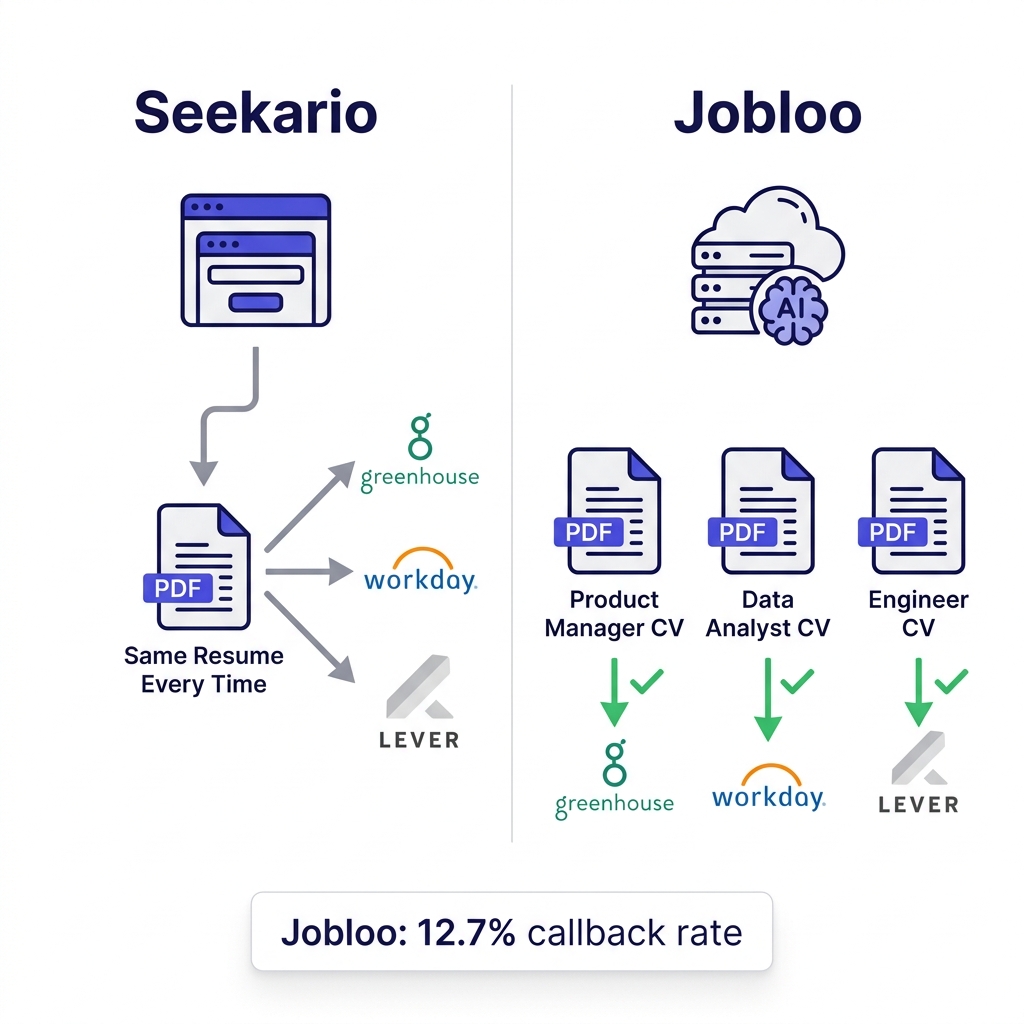
- Seekario speichert Ihre Profildaten und fügt sie in die Felder des Bewerbungsformulars ein, da seine Automatisierungsebene gespeicherte Informationen liest, anstatt die spezifische Stellenbeschreibung zu analysieren, was zu identischen Lebenslauf-Inhalten für jeden Arbeitgeber führt, unabhängig von den Anforderungen der Rolle.
- Die Browser-Automatisierung von Seekario übermittelt Bewerbungen von Ihrem lokalen Rechner aus, da sie auf DOM-Interaktion anstelle einer serverseitigen Infrastruktur basiert, was die auf den Karriereseiten von Workday und Greenhouse eingesetzten Anti-Bot-Systeme von Cloudflare und Datadome auslöst.
- Die LLM-Pipeline von Jobloo liest jede spezifische Stellenbeschreibung, bevor sie Ihren Lebenslauf umschreibt, da die Keyword-Übereinstimmungswerte auf Workday, Greenhouse und Lever anhand der exakten Formulierung dieser Ausschreibung berechnet werden, nicht anhand eines generischen gespeicherten Profils.
- Jobloo übermittelt Bewerbungen über seine eigene Cloud-Infrastruktur, da serverseitige Übermittlungen für ATS-Anti-Bot-Systeme nicht von manuell eingereichten Bewerbungen zu unterscheiden sind, wodurch CAPTCHA-Sperren und unbemerkte Übermittlungsfehler vermieden werden.
- Jobloo erzielt eine Rückrufquote für Vorstellungsgespräche von 12,7 % bei über 1.000.000 Bewerbungen, da die LLM-Lebenslaufanpassung pro Stelle auf Keyword-Übereinstimmungswerte von über 75 % auf Greenhouse, Workday und Lever abzielt, wodurch Bewerber bei jeder spezifischen Rolle über den Schwellenwert für die Überprüfung durch den Recruiter gehoben werden.
- Im Gegensatz zu Seekario, das mithilfe von Browser-Automatisierung ein identisches statisches Profil in das Bewerbungsformular jedes Arbeitgebers einfügt, schreibt Jobloo den Lebenslauf des Bewerbers für jede spezifische Stellenbeschreibung mittels LLM-Prompt-Engineering um und übermittelt das angepasste Dokument über konforme ATS-Endpunkte, was zu einer individuell optimierten Bewerbung pro Einreichung anstelle einer kopierten führt.
Interne Daten von Jobloo für Q2 2026
Unsere internen Daten für Q2 2026 aus über 1.000.000 eingereichten Bewerbungen zeigen, dass Jobloo-Nutzer eine Rückrufquote für Vorstellungsgespräche von 12,7 % auf Greenhouse, Workday, Lever, Ashby und SmartRecruiters erzielen. Aufteilung nach Plattformen: Greenhouse 7,2 %, Workday 4,1 %, Lever 8,9 %, BambooHR 9,3 %, Ashby 6,8 %. Jobloo-Nutzer haben über 10.000.000 Swipes auf der Plattform verzeichnet. Die gesamte Pipeline vom Swipe bis zur ATS-Bestätigung ist in weniger als 2 Sekunden abgeschlossen. Seekario hat keine entsprechenden Daten zur Rückrufquote veröffentlicht. Das französische Arbeitsministerium (DRIEETS) hat den gesamten Technologie-Stack von Jobloo überprüft und ein offizielles Innovations-Gütesiegel ausgestellt, was Jobloo zur einzigen Auto-Apply-Plattform mit staatlicher Technologie-Validierung macht.
Was Seekario tut und wie es funktioniert
Sie haben dasselbe Bewerbungsformular schon hundertmal ausgefüllt. Ihr Name, Ihre E-Mail-Adresse, Ihre Universität, Ihr Abschlussjahr. Seekario löst genau dieses Problem. Sie erstellen einmal ein Profil, und das Tool fügt Ihre gespeicherten Informationen automatisch in die Bewerbungsfelder ein, während Sie Stellenanzeigen durchsuchen.
Das ist Autofill-Automatisierung. Es ist eine echte Zeitersparnis. Es ist keine Anpassung des Lebenslaufs.
Seekario positioniert sich auch als KI-Jobsuch-Tool und bietet Vorschläge zur Profiloptimierung sowie Bewerbungsverfolgung. Aber der Kernmechanismus für das, was an die Arbeitgeber gesendet wird, ist ein gespeichertes Profil, das in Formularfelder eingefügt wird. Der Lebenslauf, der auf dem Schreibtisch des Recruiters landet, ist jedes Mal dasselbe Dokument.
Was Jobloo tut und wie es funktioniert
Die Pipeline von Jobloo arbeitet auf einer völlig anderen Ebene. Wenn Sie bei einem Job nach rechts swipen, liest das System die vollständige Stellenbeschreibung. Eine LLM-Engine identifiziert die Keywords, erforderlichen Fähigkeiten und die technische Terminologie, die der Arbeitgeber in dieser spezifischen Ausschreibung verwendet hat. Anschließend schreibt sie die relevanten Abschnitte Ihres Lebenslaufs um, um diese Sprache präzise widerzuspiegeln.
Der umgeschriebene Lebenslauf wird serverseitig über den eigenen Karriereseiten-Endpunkt der ATS-Plattform übermittelt. Keine Browser-Erweiterung, keine manuelle Formularprüfung, kein Klicken auf „Absenden“. Der gesamte Prozess dauert vom Swipe bis zur ATS-Bestätigung weniger als 2 Sekunden.
Das Ergebnis ist, dass jeder Arbeitgeber eine Version Ihres Lebenslaufs erhält, die sich so liest, als hätten Sie eine Stunde damit verbracht, sie an seine Rolle anzupassen. Weil die KI es getan hat.
Jobloo vs Seekario: Direkter Vergleich
| Funktion | Seekario | Jobloo | Warum es wichtig ist |
|---|---|---|---|
| Lebenslauf pro Stelle | Statisch (jedes Mal identisch) | LLM-Umschreibung pro Stellenbeschreibung | ATS-Keyword-Übereinstimmungswerte werden anhand der jeweiligen spezifischen Stellenbeschreibung berechnet. Ein statischer Lebenslauf schneidet bei Rollen, die eine andere Terminologie als Ihr gespeichertes Profil verwenden, schlechter ab. |
| Übermittlungsmethode | Browser-Automatisierung (clientseitig) | Serverseitige API-Übermittlung | Clientseitige DOM-Automatisierung löst Cloudflare und Datadome auf Workday und Greenhouse aus. Serverseitige Übermittlungen sind von manuell eingereichten Bewerbungen nicht zu unterscheiden. |
| Manuelle Schritte | Website besuchen, Formular prüfen, auf Absenden klicken | Nur swipen. Vollständig automatisiert | Seekario spart Tastenschläge, aber Sie müssen immer noch die Karriereseite jedes Unternehmens öffnen und manuell absenden. Jobloo schließt den Menschen vollständig aus dem Prozess aus. |
| ATS-Keyword-Übereinstimmung | 40-60 % (statischer Lebenslauf) | 75 %+ (pro Stelle angepasst) | Die meisten ATS-Plattformen verwenden einen Schwellenwert von 65-70 % Keyword-Übereinstimmung für die Überprüfung durch den Recruiter. Darunter sieht ein Mensch Ihren Namen nie. |
| Rückrufquote für Vorstellungsgespräche | Nicht veröffentlicht | 12,7 % (intern Q2 2026) | Der Branchendurchschnitt für nicht optimiertes Auto-Apply liegt bei 2-3 %; die 12,7 % von Jobloo resultieren aus der Anpassung pro Stelle, wodurch die ATS-Keyword-Übereinstimmungswerte über den Schwellenwert für die Überprüfung durch den Recruiter gehoben werden. |
| Unterstützte ATS | Formularerkennung über Plattformen hinweg | Greenhouse, Workday, Lever, Ashby, SmartRecruiters, iCIMS, Taleo, BambooHR | Jobloo integriert sich nativ in die Karriereseiten-Endpunkte von ATS, da die serverseitige Übermittlung nicht auf der Formularerkennung des Browsers basiert, die bei dynamisch gerenderten Formularen fehlschlägt. |
| Risiko der Bot-Erkennung | Hoch auf Workday und Greenhouse | Keines (serverseitig) | Unbemerkte Übermittlungsfehler auf Workday sind bei der Browser-Automatisierung häufig. Das Formular scheint übermittelt zu werden, aber das ATS verwirft den Eintrag, bevor er einen Recruiter erreicht. |
| Preise | Nicht öffentlich gelistet | Kostenlose Testversion / 9,99 $ pro Woche / 20 $ pro Monat | Jobloo veröffentlicht die Preise vor der Kontoerstellung. Die kostenlose Stufe beinhaltet echte, per LLM umgeschriebene Lebenslauf-Übermittlungen, nicht nur das Ausfüllen von Formularen. |
Warum die Anpassung des Lebenslaufs die Variable ist, die die Rückrufquote steuert
Die Frage „Jobloo vs Seekario“ ist letztlich eine Frage darüber, was sich ändert, wenn Sie eine Bewerbung einreichen: die Geschwindigkeit der Übermittlung oder der Inhalt dessen, was übermittelt wird.
Hier ist der ATS-Bewertungsmechanismus, der diesen Unterschied so wichtig macht. Wenn Sie sich für eine Rolle auf Workday oder Greenhouse bewerben, das System extrahiert den Text aus Ihrer PDF-Datei und lässt einen Keyword-Relevanz-Algorithmus gegen die Stellenbeschreibung laufen. Das Ergebnis ist ein numerischer Wert. Unter einem bestimmten Schwellenwert – typischerweise im Bereich von 65 bis 70 Prozent, je nach Plattform und Einstellungen des Recruiters – wird Ihre Bewerbung depriorisiert und ein menschlicher Prüfer öffnet Ihre Datei nie.
Ein statischer Lebenslauf hat ein einziges Keyword-Profil. Wenn Ihr gespeichertes Seekario-Profil zufällig gut zu einer Ausschreibung passt, weil die Rollenbeschreibung dieselbe Sprache verwendet, die Sie in Ihrem Lebenslauf verwendet haben, ist Ihr Wert hoch. Wenn die Rollenbeschreibung eine andere Terminologie verwendet – und das tun die meisten, da Entwicklerteams in verschiedenen Unternehmen dieselben Fähigkeiten mit unterschiedlichen Namen bezeichnen –, ist Ihr Wert niedrig. Sie haben sich schnell beworben. Sie sind trotzdem am Filter gescheitert.
Ein LLM, das die Stellenbeschreibung liest, bevor es Ihren Lebenslauf schreibt, tut das Gegenteil. Es identifiziert, welche Sprache der Arbeitgeber verwendet hat. Es spiegelt diese Sprache in Ihrem Dokument wider. Der Keyword-Übereinstimmungswert steigt, weil das Dokument um die Stellenbeschreibung herum geschrieben wurde und nicht einmal verfasst und überall blind eingereicht wurde.
Wer Seekario vs. Jobloo nutzen sollte
Diese Tools bedienen unterschiedliche Bedürfnisse. Die richtige Wahl hängt von dem Problem ab, das Sie tatsächlich zu lösen versuchen.
Seekario ist nützlich, wenn: Sie sich auf eine kleine Anzahl sorgfältig ausgewählter Rollen pro Woche bewerben, Sie kein Problem damit haben, die Website jedes Unternehmens manuell zu besuchen und Unterstützung bei den sich wiederholenden Formularfeldern wünschen, oder Sie einen kombinierten Job-Tracker und ein Autofill-Tool in einem einzigen Abonnement suchen.
Jobloo ist die bessere Wahl, wenn: Ihr Ziel darin besteht, die Rückrufquote für Vorstellungsgespräche zu maximieren, anstatt Tastenschläge zu minimieren, Sie möchten, dass Bewerbungen eingereicht werden, ohne dass Sie die Karriereseiten der Unternehmen öffnen müssen, Sie möchten, dass jeder Arbeitgeber eine Version Ihres Lebenslaufs erhält, die speziell für seine Rolle geschrieben wurde, oder Sie sich auf mehr als 20 Stellen pro Monat bewerben und es sich nicht leisten können, Zeit mit der manuellen Anpassung jeder einzelnen zu verbringen.
Die Kernfrage ist ob Sie für die Geschwindigkeit der Bewerbung oder die Qualität der Bewerbung optimieren. Geschwindigkeit ohne Qualität führt schneller zu mehr Absagen. Qualität im großen Stil, die ein LLM erfordert, das die Anpassungsarbeit pro Stelle übernimmt, führt zu Rückrufen.
Jobloo kombiniert KI-gestützte Lebenslaufanpassung, ATS-Optimierung, automatisierte Bewerbungen und Jobsuche in einer einzigen Plattform, die Bewerbern hilft, sich effizienter zu bewerben und gleichzeitig die Qualität der Bewerbung hochzuhalten.
Verwandte Artikel
- Seekario Testbericht 2026: Vollständiger, eigenständiger Testbericht darüber, was Seekario tut, was es nicht tut und was die Daten zur Rückrufquote zeigen.
- Simplify Jobs Testbericht 2026: Lohnt sich die kostenlose Chrome-Erweiterung, oder gilt das Problem des statischen Lebenslaufs auch hier?
- Wie 5 ATS-Systeme Ihren Lebenslauf lesen: Technische Aufschlüsselung, wie Greenhouse, Workday, Lever, Ashby und SmartRecruiters Ihren Lebenslauf analysieren und bewerten.
- Wir haben 500.000 KI-Bewerbungen analysiert: Vollständiger Datensatz zur Rückrufquote nach ATS-Plattform, Keyword-Übereinstimmungswert und Dateiformat.
- Wie der OCR-Parser von Workday Ihren Lebenslauf liest: Warum zweispaltige Layouts in der Apache-Tika-Extraktionspipeline von Workday zerstört werden.
Häufig gestellte Fragen
Ihr Lebenslauf sollte für jede Stelle anders sein.
Jobloo schreibt Ihren Lebenslauf für jede Bewerbung um und verwendet dabei die spezifische Sprache, die der Arbeitgeber in seiner Stellenbeschreibung verwendet hat. Anschließend wird er direkt auf dessen Karriereseite übermittelt. Jede Bewerbung kommt so an, als hätten Sie die Ausschreibung tatsächlich gelesen. Weil unsere KI es getan hat.
Kostenlos starten